Best MCAT Prep Courses in 2026: Verified Prices and the Guarantee Fine Print
By MCAT Study Planner Team • Updated 9/3/2026
Short answer: if you want a course, Blueprint Self-Paced at $1,299 is the most defensible buy. But the bigger finding is that most score guarantees do not cover the courses students actually purchase, and no course price is the real price.
We priced every major MCAT prep course directly from the providers’ own pages on 3 September 2026, then read each guarantee’s actual terms page instead of its marketing headline. Two things came out of that, and neither appears in the roundups currently ranking for this search.
First, the guarantees are far narrower than they look. Kaplan’s applies to three of its priciest tiers and excludes the courses most people buy. Princeton Review’s headline “515+” only promises 515 if your diagnostic is already 500 or higher, and a self-regulatory body told them in 2024 they could not substantiate the claim. Blueprint’s tutoring guarantee states in writing that it is not a refund.
Second, no course price is the whole price. AAMC’s own materials cost $323.70 and the exam costs $355, so every path starts around $678.70 before a course enters the picture.
Best MCAT prep courses compared
Prices are as verified on 3 September 2026. Treat them as perishable: Blueprint was running a fall sale ending 7 September and showed two different sale prices on two of its own pages the same day, and Kaplan and Princeton Review both discount frequently.
| Provider | What it actually is | Price | Full-lengths | Score guarantee |
|---|---|---|---|---|
| Blueprint | Self-paced or live course | $1,299 self-paced, $1,899 live, $2,599 for 515+ | 10 own, 16 with AAMC | Yes, refund or extension |
| Kaplan | Largest catalog, strongest live option | From $1,299 on demand, $1,999 live, $2,999 for 515+ | 21 | Top three tiers only |
| Princeton Review | Most live classroom hours | From $1,599 self-paced, $7,349 immersion | 17 to 18 | Yes, heavily conditional |
| UWorld | A question bank, not really a course | From $339 qbank, $599 core, $1,199 comprehensive | 2 own, 7 AAMC on top tier | None |
| Magoosh | Cheapest genuine course | $379 for one month, $399 for twelve | Up to 3 | Yes, 10 points |
| Examkrackers | Self-paced with live tutoring included | From $999, live course $2,495 | About 10 | Access only, not score |
| Khan Academy | Free video library, no course structure | Free | None | None |
| AAMC | Official practice. Not optional | $323.70 bundle | 7, of which 2 free | None |
Two rows are highlighted because they are the two purchases we would defend for most people: the AAMC bundle, which is not optional, and Blueprint Self-Paced, if you have concluded you want a course at all.
What MCAT prep actually costs
Every roundup quotes the course price. None of them adds the materials you are then required to buy anyway.
The AAMC writes the MCAT, and its practice material is the only material with real predictive value. Every major course either bundles AAMC content or explicitly tells you to buy it separately. So the AAMC bundle at $323.70 is a floor, not an upsell. Add the $355 registration fee and you are at $678.70 before choosing a course.
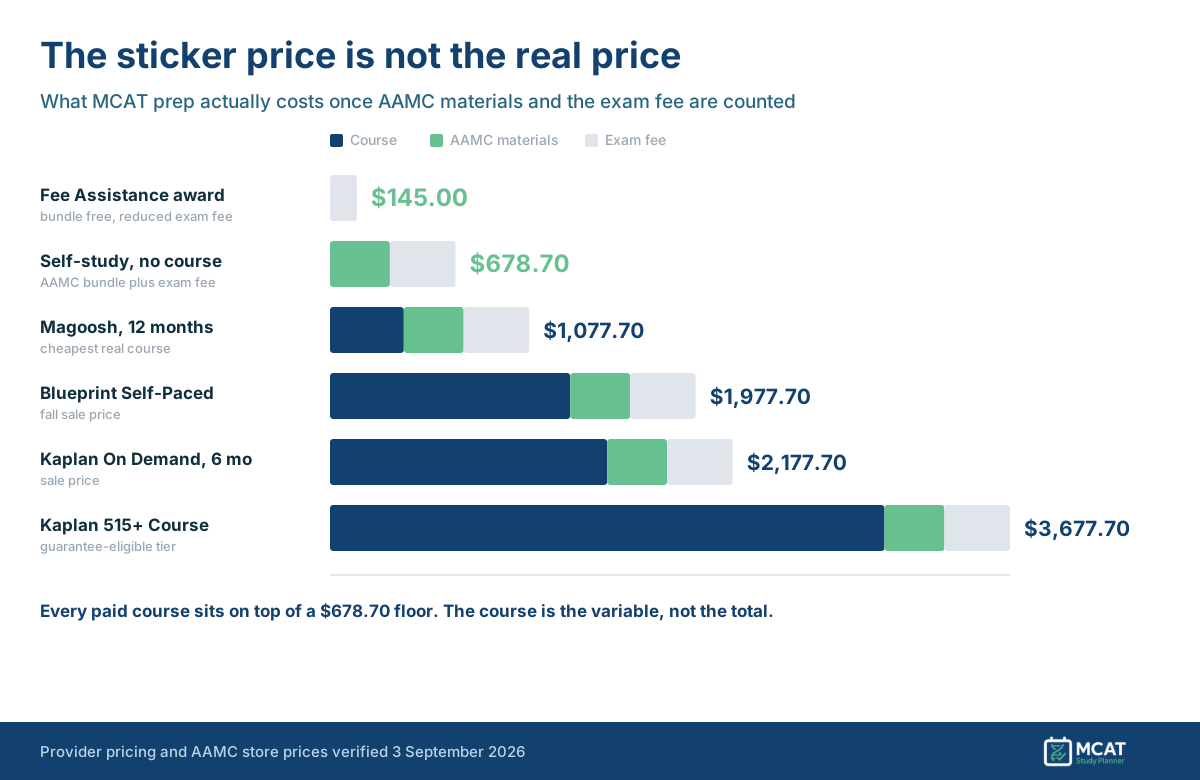
A $1,299 course is really a $1,977 decision, and Kaplan’s guarantee-eligible tier is really $3,677.
The exception is worth knowing about because it is large and under-claimed. The AAMC Fee Assistance Program gives awardees the full prep bundle free and cuts registration from $355 to $145. Eligibility is a US address and household income at or below 400% of the 2025 federal poverty level for your household size. If that is you, your entire prep cost can be $145, and you should apply before spending anything else.
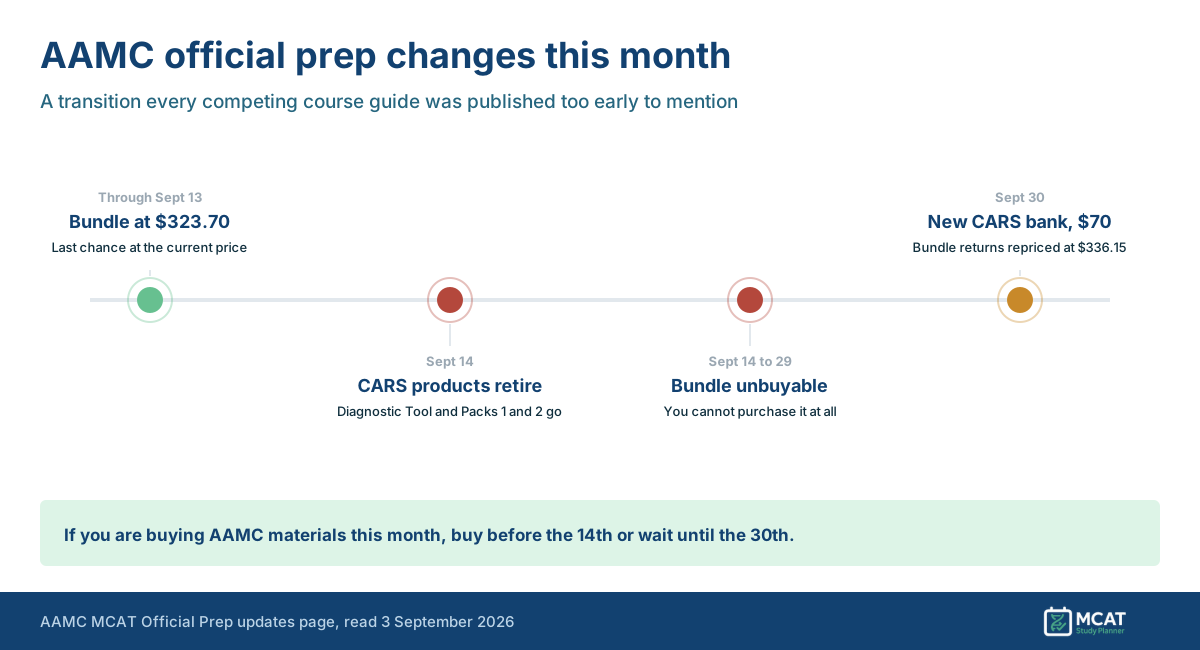
Before you buy AAMC materials this month. The bundle is $323.70 through 13 September. From 14 September the CARS Diagnostic Tool and CARS Question Packs 1 and 2 are retired and the bundle cannot be purchased at all until 29 September. On 30 September it returns at $336.15 with a new 575-question CARS Question Bank. Buy before the 14th or wait until the 30th.
The score guarantees, read properly
This is where the marketing and the terms pages disagree most, so we read every provider’s actual guarantee page.
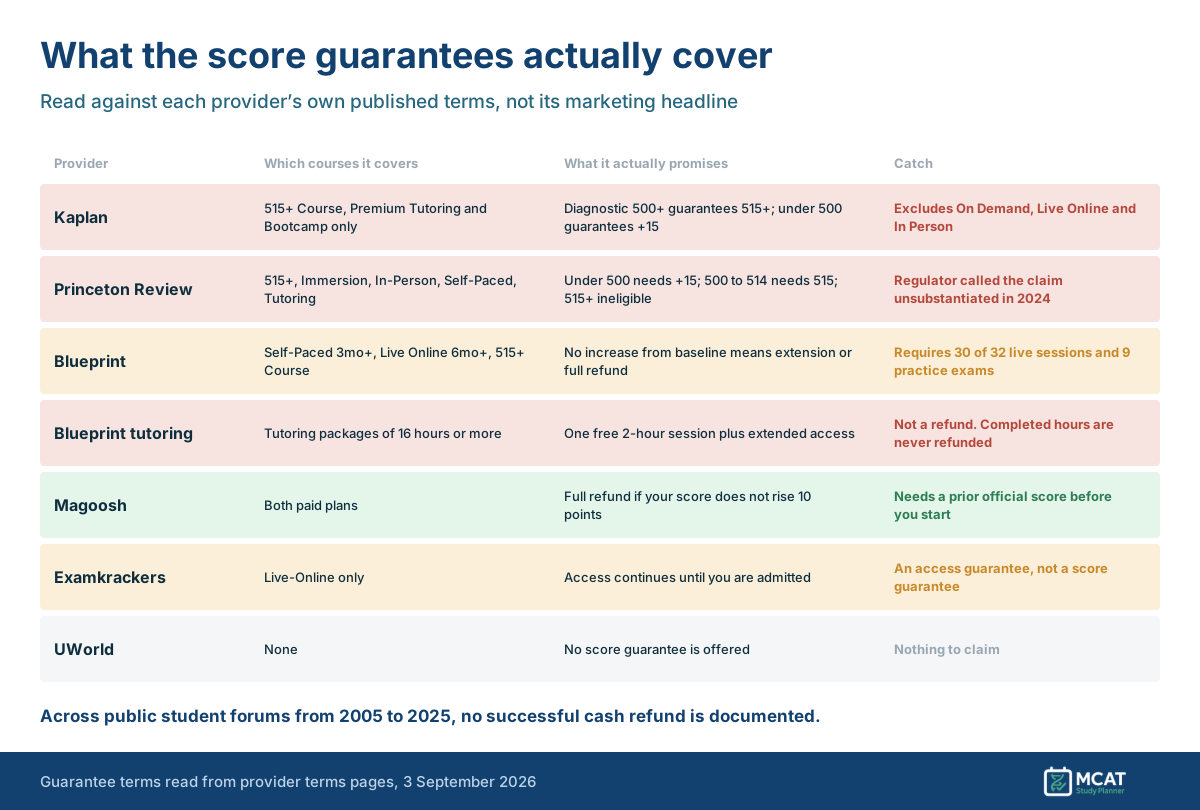
Kaplan’s guarantee does not cover Kaplan’s popular courses. Per its own terms, the Higher Score Guarantee applies to the 515+ Course, Premium Tutoring and Online Bootcamp. On Demand, Live Online and In Person, which span $1,299 to $3,299 and are what most students buy, are not covered. Kaplan’s separate “15-point average” marketing claim is footnoted as describing only students who completed more than 4,400 practice questions and 550 study activities, which makes it a statistic about very diligent people, not a promise to you.
Princeton Review’s “515+” is conditional on where you start. The terms split it: if your diagnostic is below 500 you need a 15-point gain, and only if you start between 500 and 514 does the guarantee actually mean 515. Start at 515 or above and you are ineligible. There is also a regulatory footnote worth knowing. In April 2024 the National Advertising Division, acting on a challenge filed by Blueprint, recommended Princeton Review discontinue the 515+ money-back claim because it could not substantiate that a substantial proportion of students achieved it. NAD findings are not binding unless referred to the FTC, and the claim is still on the site today.
Blueprint’s course guarantee is real, and its tutoring guarantee is not a refund. The course version genuinely offers a full refund or an extension if you do not improve on your baseline. The tutoring version states plainly that completed tutoring hours cannot be refunded, and the remedy is one free two-hour session plus extended access.
Magoosh’s is the cleanest of the group. A full refund if your score does not rise 10 points. The catch is structural rather than hidden: you need a prior official score before you start, so it is only usable by retakers.
Now the part that matters more than any of the terms. We looked for students who actually claimed one of these guarantees. Across Student Doctor Network threads from 2005 through 2025 we could not find a single documented successful cash refund. The recurring pattern is a dispute over whether the student completed every requirement. A February 2025 thread describes a Blueprint 515+ student who did not hit the target and whose family found the company, in their words, “busier arguing their case than honoring what they had already stated.” A 2012 Princeton Review claimant wrote that they had read the fine print and “fulfilled every one of them” without a refund resulting.
That does not prove refunds never happen. Satisfied claimants have little reason to post. But if a guarantee is the reason you are choosing a course, treat it as a tie-breaker and not as insurance, and read the completion requirements before you pay. Blueprint’s 515+ guarantee, for example, requires attending 30 of 32 live sessions, completing every learning module, sitting nine practice exams and answering 1,000 additional questions.
Do you actually need a paid course?
Every page selling you a course skips this question. It should be the first one.
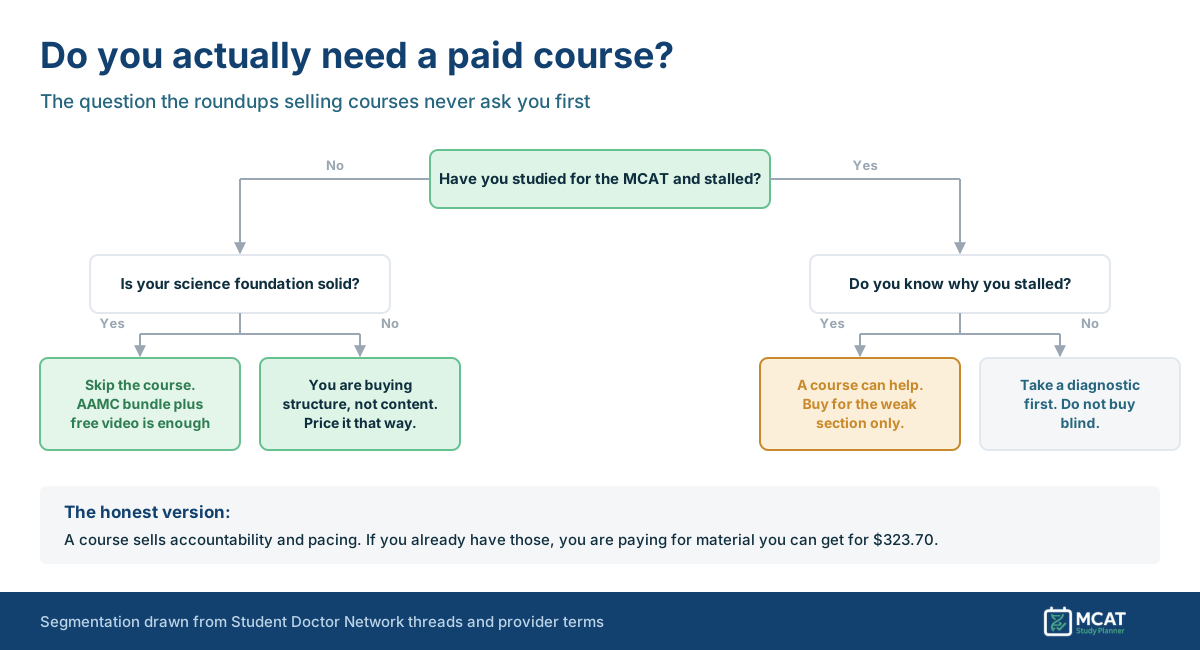
On Student Doctor Network, high scorers who self-studied are not unusual. A 519 scorer preparing while serving full time describes working from prep books plus free video. A 521 scorer puts total spending around $85 for six months of prep. Amherst College’s own premed advising page goes further and states that its highest MCAT scorers generally prepared without Kaplan or Princeton Review.
So what does a course actually sell? Accountability and pacing. Someone else decides what you do on Tuesday. For students who will not build or hold a schedule alone, that is worth real money. For students who will, it is roughly $1,000 for material available for $323.70.
The honest segmentation from those threads looks like this. A course tends to help if you need externally imposed structure, if your science coursework is far enough back that you would not recognize the content, or if you have already plateaued self-studying and know which section is the problem. A course tends not to help if you are disciplined, currently in coursework, and weak in only one or two areas. In that last case, buy the weak area rather than the whole course. Our guide to the best free MCAT resources covers what to use instead.
The one thing nobody publishes. No provider discloses course completion rates, and no student community has assembled them. That silence is worth noticing before you buy a calendar you may not finish.
The providers, reviewed
Blueprint MCAT
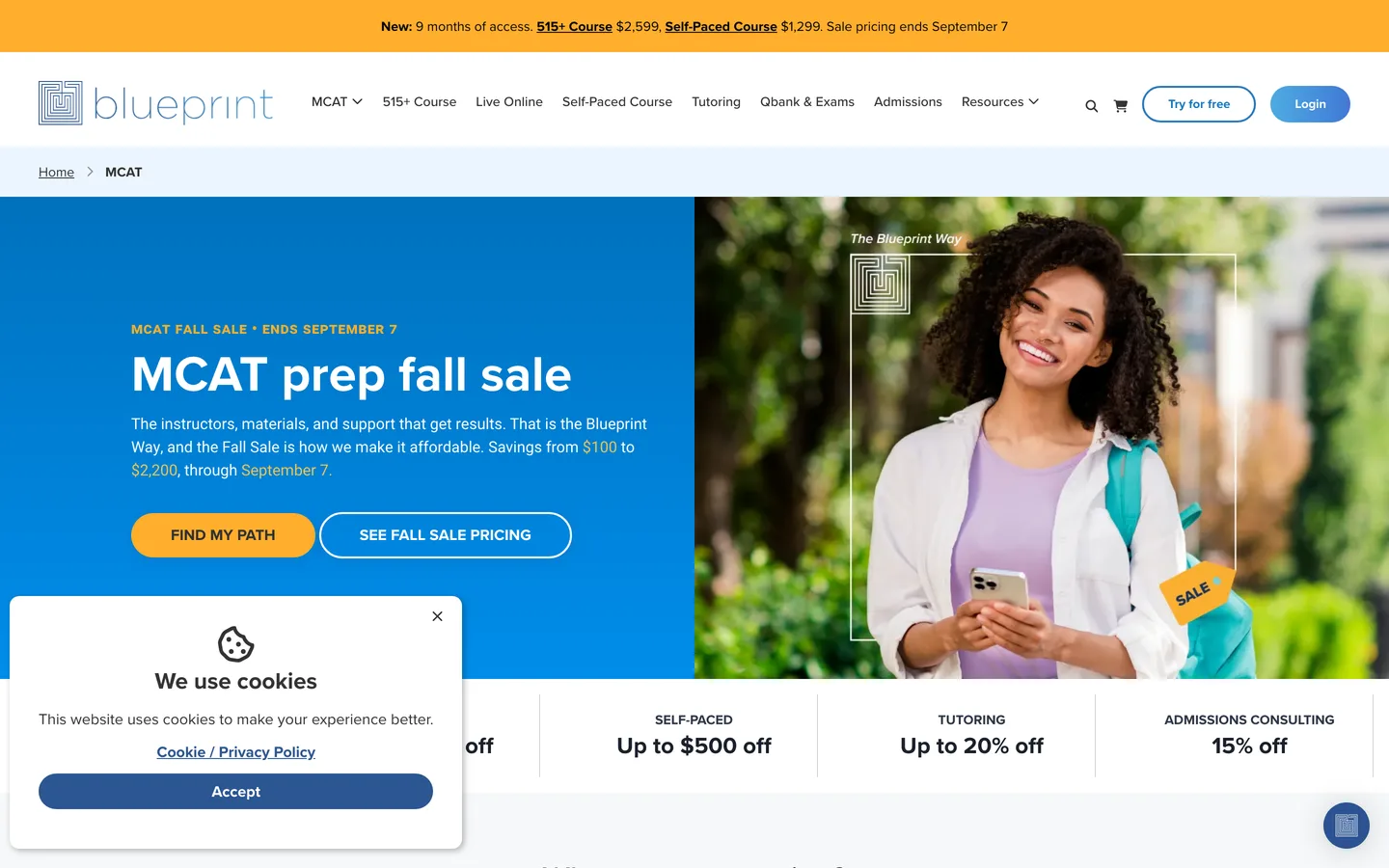
Blueprint sells Self-Paced at $1,299, Live Online at $1,899 and a 515+ Course at $2,599, all on a fall sale ending 7 September, with nine months of access. The Live Online tier includes 16 full-lengths, of which 10 are Blueprint’s and six are official AAMC exams, plus a qbank of more than 5,000 questions and 40 or more live hours.
The 14-day free trial is unusually generous and includes a built day-by-day study calendar, so you can evaluate the planning layer before paying. Worth knowing: Blueprint’s standalone qbank and exam product at $99 per month does not include AAMC content, so do not mistake it for the course bundle.
The recurring criticism on Student Doctor Network concerns the qbank’s balance, with far more standalone questions than passage sets in some sections, and full-lengths that run harder than the real exam. Scoring lower on a Blueprint exam than on an AAMC one is common and is not a reason to panic.
Verdict. The best default if you want a course. Fair price, a guarantee that applies to the tier you are buying, and the most useful free trial for judging whether the structure suits you.
Kaplan MCAT
Kaplan has the deepest catalog: On Demand from $1,299, Live Online from $1,999, In Person from $2,899, a 515+ Course and Premium Tutoring at $2,999, and a five-week Online Bootcamp at $6,299. It also has the most practice exams of anyone at 21, with AAMC material integrated rather than itemized, and 42 hours of live class time across 14 sessions in the live tiers.
If you want live teaching with a fixed timetable and a well-worn syllabus, Kaplan is the strongest option in this list. The 30-day free starter pack includes a full-length exam, though only a preview of the study calendar rather than the planner itself.
The two things to weigh are the guarantee exclusion described above, which is significant, and a consistent report that Kaplan full-lengths score below AAMC exams. Use them for practice and not for prediction.
Verdict. Buy Kaplan for the live instruction, not for the guarantee. If the guarantee is your reason, you have to step up to the $2,999 tier to actually have one.
The Princeton Review
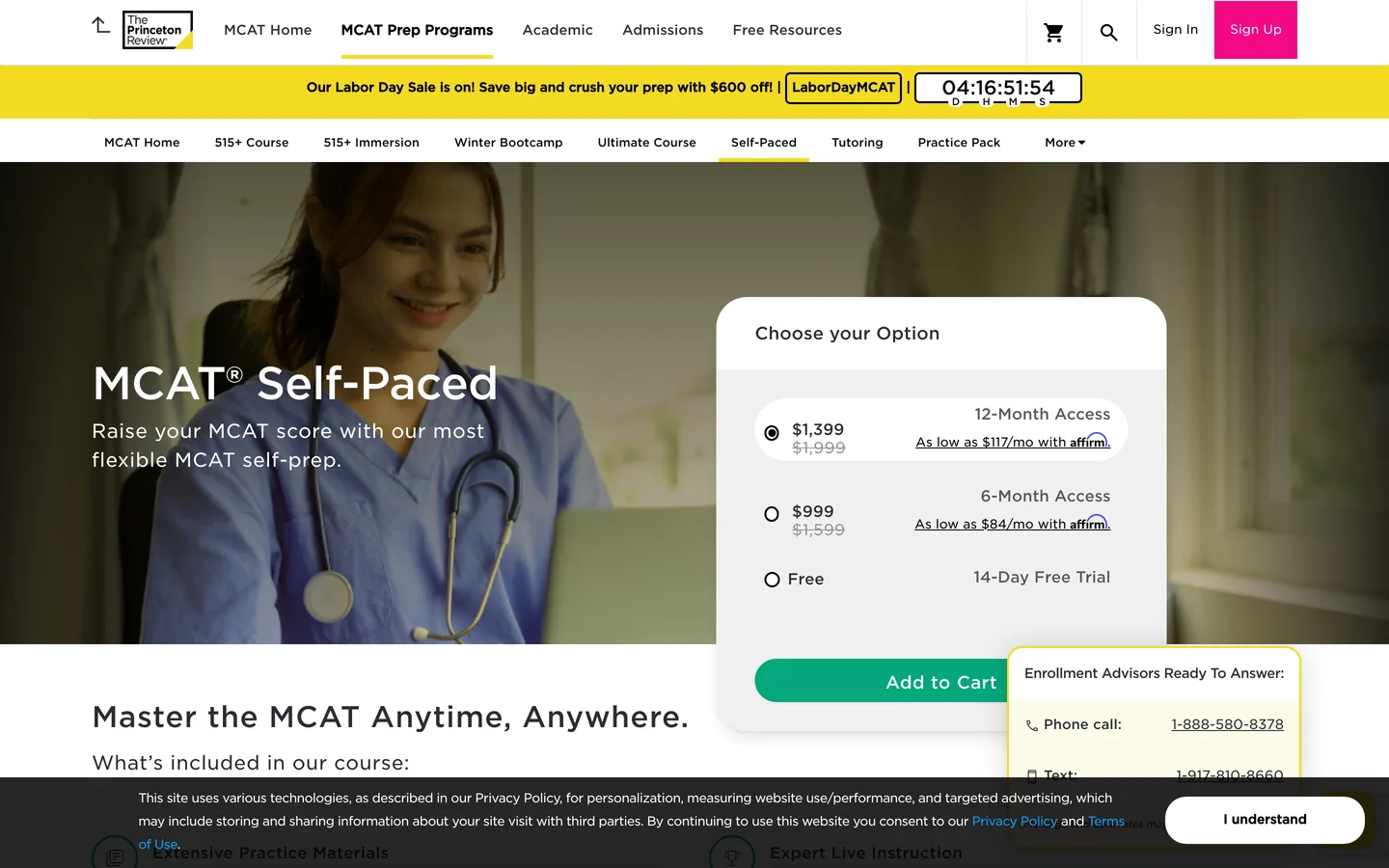
Princeton Review offers the most live classroom time in the category. The Ultimate course advertises 123 live hours and the 515+ Immersion course 195, against 18 full-lengths and more than 500 hours of video. Self-Paced starts at $1,599 and Immersion is $7,349.
There is a transparency problem. The Ultimate and In-Person courses do not publish a price. Ultimate shows “starting at” and requires you to enter a test date and location to see a number. Princeton Review is also the only major provider with no single page comparing its own tiers side by side, which makes it the hardest of the group to shop honestly.
The recurring substantive complaint concerns CARS, where students report the practice passages are shorter and more direct than the real exam. If CARS is your weak section, read our CARS study guide before spending here.
Verdict. Choose it only if maximum live classroom hours is your specific requirement. Get the exact price in writing before enrolling, and do not buy on the strength of the 515+ headline.
UWorld MCAT
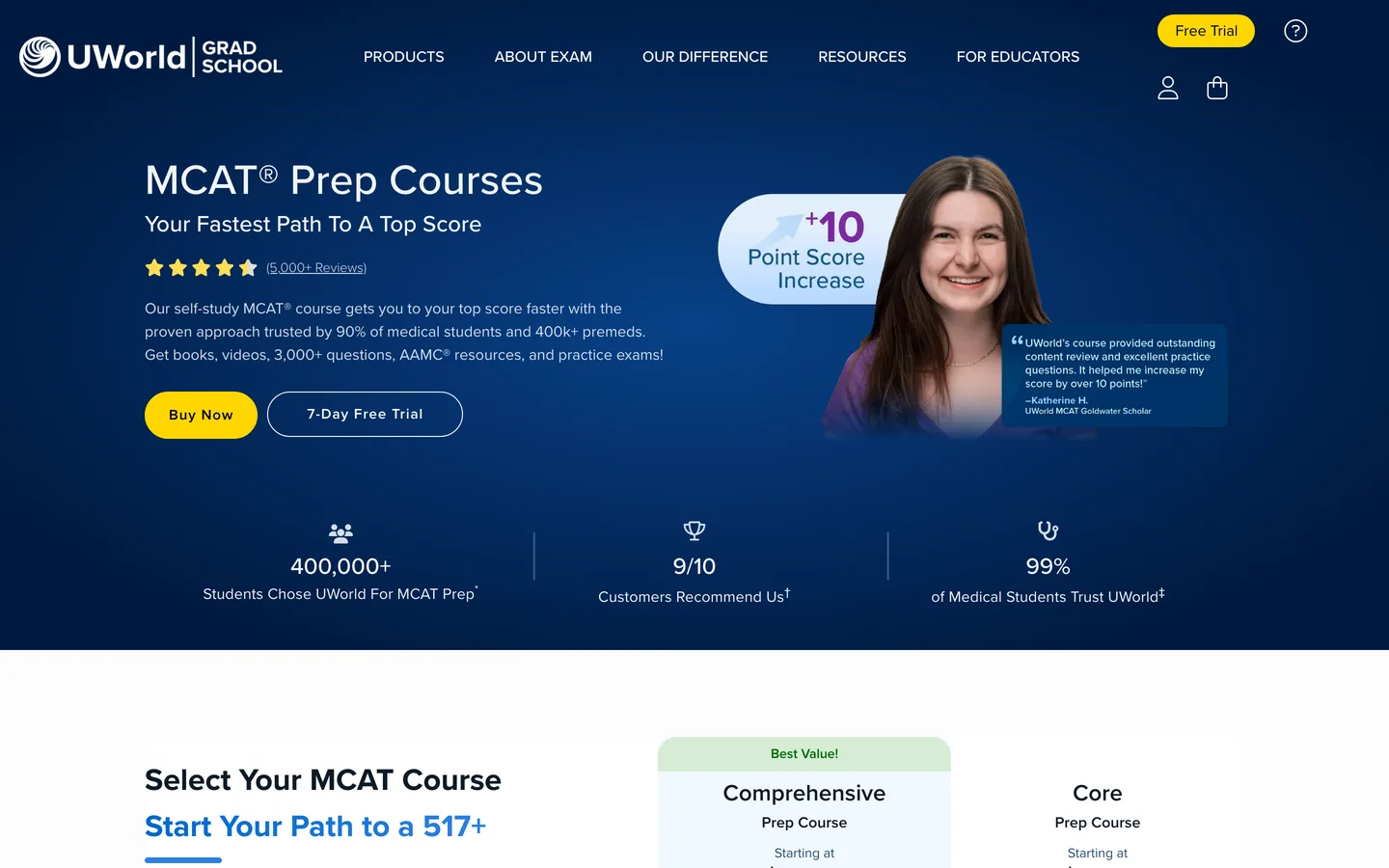
UWorld is a question bank company, and its “courses” are that qbank with videos and books added on the same duration pricing. The QBank runs $339 to $439, Core $599 to $699, and Comprehensive $1,199 to $1,549. Comprehensive is the only tier that includes the seven AAMC exams, alongside two UWorld full-lengths.
The qbank itself has more than 3,000 questions and explanations that are widely considered the best in the category. There is no live instruction and no score guarantee. The seven-day free trial requires no card and includes the adaptive study planner.
One thing to be aware of when researching: UWorld and efficientlearning.com share a corporate owner, and both rank at the top of search results for MCAT course comparisons with UWorld named best overall. Those are vendor pages, not independent reviews.
Verdict. Excellent as a question bank, which is what it is. Buy the $339 QBank as a supplement, not the $1,199 tier as a course replacement.
Magoosh MCAT
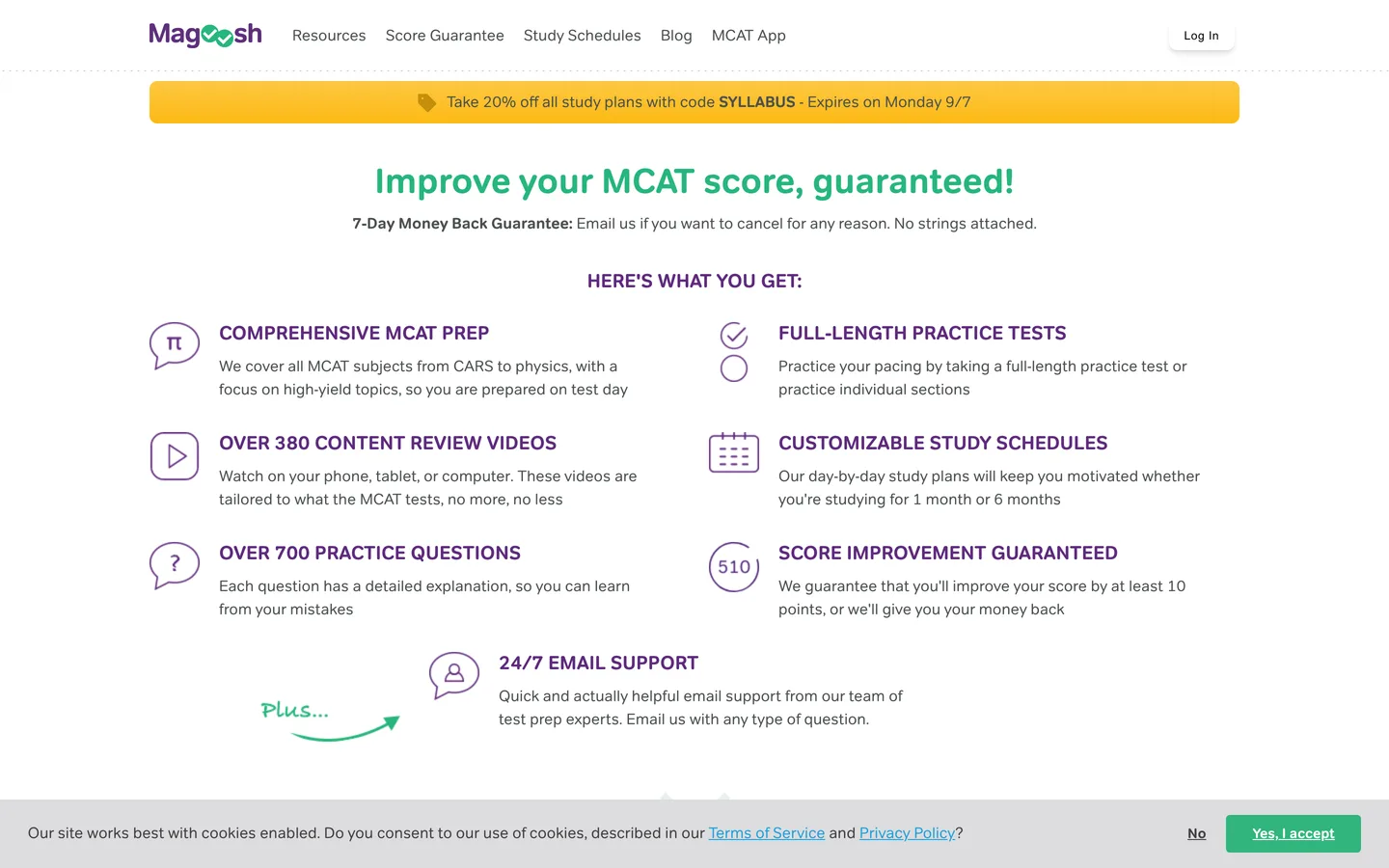
Magoosh is $379 for one month or $399 for twelve, which makes the annual plan the only sensible choice. You get more than 380 videos, more than 740 questions and up to three full-lengths, plus the cleanest score guarantee in the group at 10 points.
It is genuinely the cheapest real course, though note that several competing articles still list a $149 tier. That does not exist. The content volume is also well below Kaplan or Blueprint, and the practice questions draw a consistent complaint that they are difficult in ways the real exam is not.
Verdict. The budget pick, and the right one if you are a retaker who wants a usable guarantee. Not enough material to be your only resource.
Examkrackers
Examkrackers sells KrackU at $999 for three months, $1,399 for six, or $1,999 for access until you start medical school, plus a live online course at $2,495 with 44 two-hour classes. The unusual feature is that live tutoring is included rather than an upsell, with Zoom office hours six days a week.
Its “Until You’re In” promise is an access guarantee, not a score guarantee, and the two should not be conflated. Their own site is also internally inconsistent on question counts, stating both 3,000 and 4,000 on the same page, and gives both 10 and 11.5 as the full-length count. Ignore the $95 to $1,745 price range you may see on affiliate sites, which does not appear anywhere on examkrackers.com.
The recurring criticism concerns their CARS books, where students find the reasoning a stretch and the format unlike the computer-based exam.
Verdict. Best value on included tutoring hours. Go in knowing the guarantee is about access, not about your score.
Khan Academy
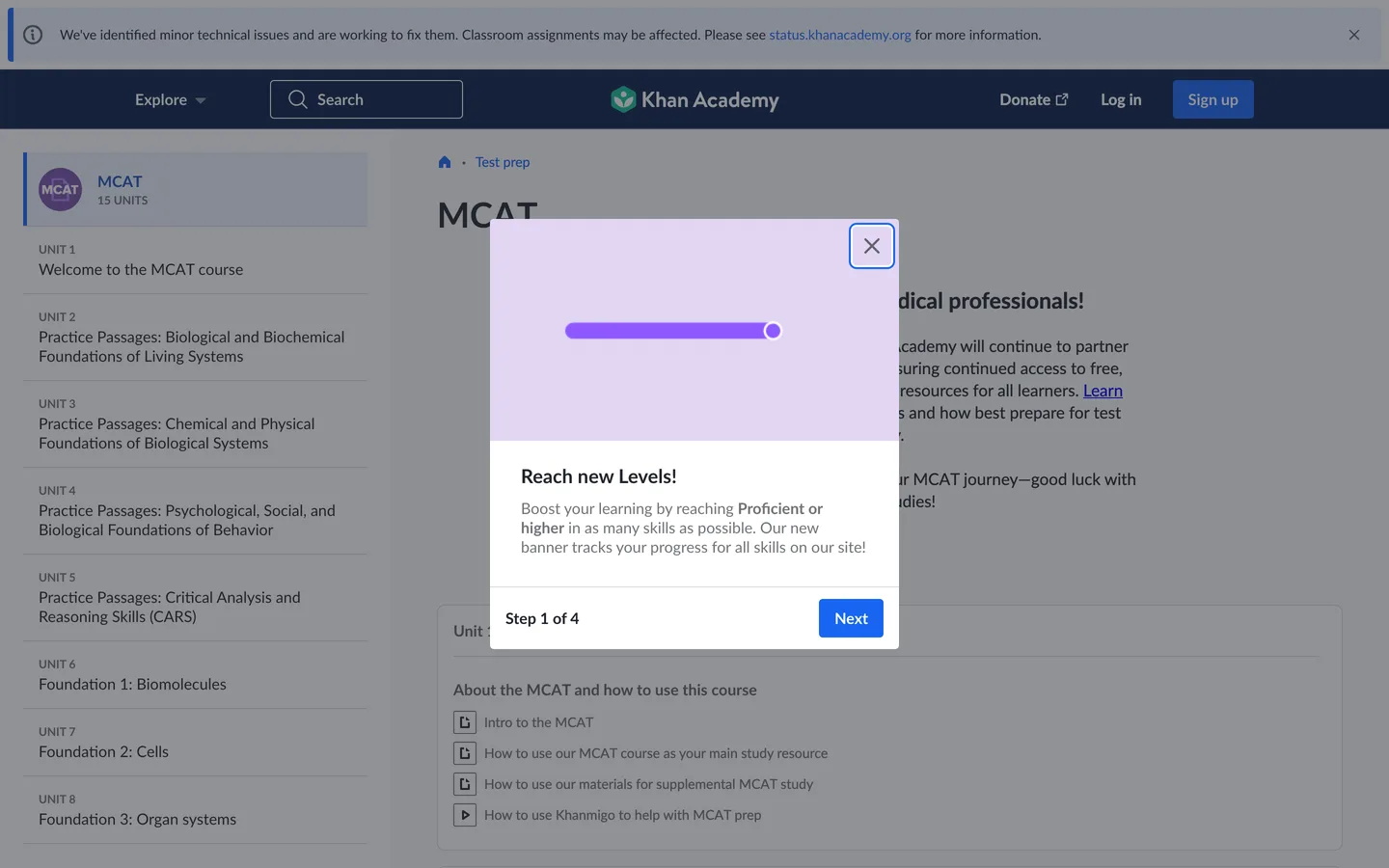
Khan Academy’s MCAT collection is free, organized around the AAMC’s own foundational concept categories, and as of today carries a banner stating the AAMC partnership will continue for years to come. This matters because the collection has been near retirement before, and some guides describe it as gone. It is not.
AAMC’s own practice products link out to Khan Academy lessons, which is about as strong an endorsement as free content gets. There are no full-length exams here and no structure, so it supplements a plan rather than being one. One correction: the widely shared 300-page Psych/Soc document is a community-made summary of Khan Academy material, not an official Khan Academy publication.
Verdict. The best free content review available. Pair it with the AAMC bundle and you have a credible prep plan for $323.70.
AAMC official prep
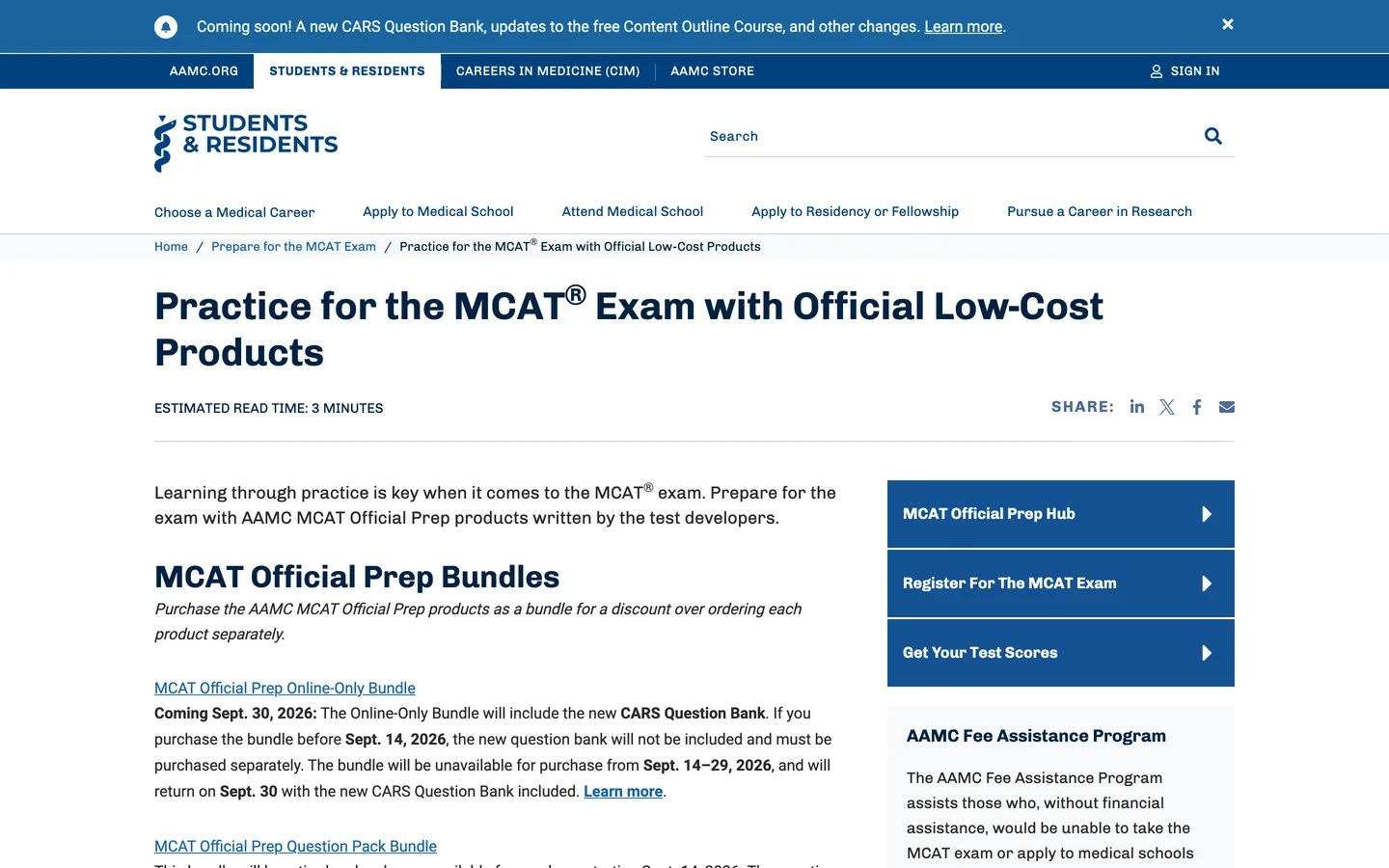
This is not a course and not optional. There are seven official full-length exams: Practice Exam 1 and the Unscored Sample Test are free, and Exams 2 through 6 are $35 each. Add the two Section Bank volumes at $45 each, the question packs at $15 each and the Independent Question Bank at $10, and buying individually totals $390. The Online-Only Bundle is $323.70, so the bundle is the correct purchase.
All online products expire 365 days after purchase, which is a real planning constraint. Do not buy the bundle 18 months before your test date. AAMC no longer sells a printed Official Guide or a flashcard product, so ignore guides that quote prices for them.
Verdict. Buy this first, before any course, and time the purchase so the 365 days covers your actual study window. Check the September dates above.
Which practice exams predict your real score
This is buying information the companies selling practice exams have little incentive to volunteer.
The consensus on Student Doctor Network is consistent: use AAMC full-lengths to predict your score and everything else for practice. Students report landing within roughly one to three points of their AAMC full-length average, while third-party exams skew in different directions. Kaplan and Princeton Review exams are widely described as deflated. Others inflate in particular score bands. No third-party provider is agreed to be closest to the real thing.
The practical consequence is that a course’s full-length count is a weaker selling point than it appears. Twenty-one exams are useful for building stamina and finding content gaps, but the seven AAMC exams are the ones that tell you where you actually stand. Our guide on when to take your full lengths covers how to space them.
Fitting a course into a real schedule
If you do buy a course, this is where it usually goes wrong, and it is the part every roundup stops short of.
Course calendars are built for a full-time student. Students on Student Doctor Network working 36 to 60 hours a week consistently report needing about double the assumed timeline, or quietly abandoning the prescribed calendar and rebuilding it themselves. One recommendation from those threads is to budget seven to eight months of part-time study to cover what a three-month full-time plan assumes.
Every provider here now ships some kind of study planner, and several include it in the free trial, so the question is not whether one exists but whether it bends. A course planner is built around that course’s content in that course’s order. If you fall three weeks behind, the useful question is what to cut, and a vendor’s planner is not designed to tell you to skip its own material.
That is the gap our free study planner fills: it takes your test date, your real weekly hours and the resources you actually own, then builds a calendar you can drag around when life interferes. It works whether you bought a course or not. If you want to compare approaches first, we reviewed the MCAT study plan builders, and how many hours to study has our analysis of what students really log.
The bottom line
Buy the AAMC bundle first, and check whether you qualify for Fee Assistance before spending anything. Then decide honestly whether you are buying content or buying structure. If it is content, Khan Academy plus the AAMC bundle is a real plan for $323.70. If it is structure, Blueprint Self-Paced is the most defensible course at $1,299, Kaplan is the better live classroom, and Magoosh is the cheapest way in at $399.
Whatever you choose, do not buy on the strength of a score guarantee. Read what it actually requires of you first, and assume you will need to rebuild the calendar around your own life.
How we researched this. All pricing, exam counts, trial contents and guarantee terms were read directly from each provider’s own pages and terms documents on 3 September 2026, and screenshots were captured the same day. Community evidence is drawn from public Student Doctor Network threads, labeled as consensus or individual accounts rather than presented as fact. We have no affiliate relationship with any provider named here. Prices change frequently, so verify before purchase.
Written by
MCAT Study Planner Team
Last updated 9/3/2026